Showing posts with label milt moss. Show all posts

Tuesday, September 20, 2011

An Interview with Milt Moss - Part Two


Kliph Nesteroff: In 1949 you were the comedian at The Hollywood Show Bar in Pittsburgh.

Milt Moss: Oh, yes. There were a couple places in Pittsburgh. There was Lenny Litwin's Copa. Lenny also wrote for Variety. Across the street was the other big nightclub called The Carousel. They had some others on the fringe of Pittsburgh. Holiday House, I played that. I knew some of the big agents in Pittsburgh. God, some great memories.

Kliph Nesteroff: Now, I read that you also had appeared on the Benny Rubin TV show...


Milt Moss: Yes! I had an agent/manager in New York named Jerry Rosen. He booked me with Benny Rubin. He was a great vaudeville act, but he didn't seem to take to radio and TV. He did a lot of character parts on The Jack Benny Program and things like that. He was very well known in vaudeville. I didn't know this at the time, but it was told to me by several people. There were big circuits then and he was a big act, but he just couldn't make it on television or radio. Very talented man and a terrific guy.

Kliph Nesteroff: You mentioned that you were good friends with Milton Berle.

Milt Moss: Oh and how!

Kliph Nesteroff: Did you ever appear on his television program?


Milt Moss: No, I did not. I did not appear on his show. It was at the same time that I was occupied with The Merry Mailman, so I couldn't. But I never regretted that a day in my life. Working with Ray Heatherton on The Merry Mailman was one of the greatest experiences of my life. We became such good friends. A very generous, cultured man. A very devoted American. Oh God, yes. Where some of these stories come about I don't know. What else would you like to know?

Kliph Nesteroff: You appeared on The Robert Q. Lewis Show.


Milt Moss: Oh, God that's the... that's the one person who... oh, God. That's the one person I didn't like. Yeah. Robert Q. Lewis. That was on radio. Definitely. On camera he was good, but off camera he talked... he was very... I don't know how to put it. He was a very bitchy type of person. I never liked him. The same with Griffin. The only two people that I worked with that I didn't like. Merv Griffin, as many times as I did it. One of the funniest times I did with Griffin... there was a side exit at the theater and they opened it up during the show. He walked out and the camera showed me out there with a pushcart selling hot dogs. Merv goes, "Milt, what are you doing out there?" The gag was that I was hiding Arthur Treacher's bottle of liquor.

Kliph Nesteroff: (laughs)


Milt Moss: That's what the whole thing was about. I wish I had a copy of that. We did a lot of things. I would stand up in his audience in the balcony. "Hey Moy-yev! Come up heeyah in the balcony! It's funnier up here than you are!" Sometimes he'd look over at me. "You know it's dangerous to be funnier than the star!" I'd say, "It may be dangerous, but it's not difficult." Oh, a lot of stuff like that... but I really didn't like him. Those were the two guys - that and Robert Q. Lewis. 


Kliph Nesteroff: It wasn't anything personal between you and Robert Q. Lewis though.

Milt Moss: No, it was just... it happens. Some people you like, some people you don't.  I never really had any problem with anyone I ever worked with at all.

Kliph Nesteroff: Arthur Godfrey?

Milt Moss: Oh! Oh, that's... that's... that's the other one! Forget it! He can rot in his grave!

Kliph Nesteroff: (laughs)

Milt Moss: The biggest anti-Semite in the world! I have a recording! I wish I could play you this recording! I tore his show apart doing a jungle routine. It was just absolutely fantastic. You have to hear this recording. At the end of it he says, "Get rid of that funny Jewboy."

Kliph Nesteroff: Oh, wow.


Milt Moss: I will never forget that. That's a true story. I went for him. I lunged at him. Two guys pulled me off of his back. That's a true story. I'm giving you the truth now! Later on they took The Arthur Godfrey Show out on the road. They offered for me to play the theater for a day - I turned it down. I wouldn't. I told them, "I don't want anything to do this man." He was known [for being anti-Semitic]. One of the great jokes in Miami. He owned one of the hotels in Miami. Down there they used to fly airplanes with a banner on it and it would say, you know, "Eat at Joes" or whatever. You know what I mean?

Kliph Nesteroff: Yes.


Milt Moss: There was a famous Jewish restaurant down there and the plane would fly around "Eat at the Famous Jewish Restaurant." The joke was that the plane flew over Arthur Godfrey's hotel and he had it shot down. That was the big joke at the time. Yes, that is a man I curse to this day. I will never forget that. Then I heard a lot of stories about him [that were not true], but this one happened to me personally.

Kliph Nesteroff: Around what year?

Milt Moss: I think it was around 1948.

Kliph Nesteroff: I had heard about his investment in that hotel that didn't allow any Jewish guests, but I had not heard...

Milt Moss: It was very strange. I will never forget that day. It's terrible (laughs). I could go into a similar story about Berle and a comedian named Frank Fay.


Kliph Nesteroff: Please do.

Milt Moss: I never knew him, but Berle went after him with a pipe! Milton never wanted to... people would bring it up and he would say, "I don't want to talk about it. I don't want to talk about it." Frank Fay, as I understand it, was a very good performer, a very good comedian, a very good ad-libber. I never knew him, this is just what I heard about him. He goes back to the twenties. Another story about Berle... he had this woman that he wanted to shack up with. She was at a for-women-only hotel. In order to stay with this woman he dressed up as a woman. He went up the elevator and in. He came out of her place the next day and he went down and out onto the street and of course he's dressed in these women's clothes. People are looking at him and they don't know who it is. People are laughing at him and he couldn't get a cab! He had to walk all the way to his hotel. He told me that was one of the reasons he leaned toward women's clothing - that made him realize how funny it was. That's one of the stories. 


Kliph Nesteroff: I have written down that you played Montreal...

Milt Moss: I played Montreal many times. There was a theater there called The Gaiety Theater. They had acts and they had strippers. It was good, but the opening show was always Monday morning - 12:01 am! They couldn't open before that. Do you understand? That's the way it was with the opening show. I played that theater a lot. There was a place called The Belvedere, there was a place called Canter's, there was another restaurant. A lotta places. I forget a lot of the places I played up there.

Kliph Nesteroff: The name of one was The Bucharest Room, which you played with singing star Taffy Towers and Gene Parr and his Orchestra...

Milt Moss: Yeah, that I don't remember. There were so many different places. Great city. I speak French.

Kliph Nesteroff: You played a club called Casey's in Toledo...


Milt Moss: Oh, yeah. God, I barely remember that. There was a big one... The Grayhaven in Detroit. The Grayhaven. Just thinking off the top of my head... there was The Merry-Go-Round in Youngstown, Ohio. That was a place I played a lot. I got these through people I knew and worked with on radio shows like Can You Top This. I was quite young. I worked my whole life, so I'm pretty happy.

Kliph Nesteroff: I wanted to ask you about Miami Beach, which was such a huge showbiz hub.

Milt Moss: Yes.

Kliph Nesteroff: April 1956 you played The Biltmore Terrace Hotel in Miami. There was also a film shot at Miami Beach that featured a lot of nightclub comics...

Milt Moss: Yeah, with Jerry Lewis. No, I wasn't in it, but some of my friends were.

Kliph Nesteroff: I didn't mean The Bellboy. There's another film called Miami Expose.


Milt Moss: Oh, yeah. I did a character part in that with my good friend Lee J. Cobb. I've got pictures of us together. I played a Spanish hotel police guy. Today you couldn't do that. Even though I'm a master of dialects, you would have to actually be Puerto Rican or Cubana to play a part like that. Yes, it was called Miami Expose. It was the last picture that Edward Arnold made. I didn't meet him. Lee J. Cobb said, "We're gonna go up to New York to do another picture. You're coming with me." It was written up in the papers, but it never came out. He didn't do the picture.


Kliph Nesteroff: What do you remember about the making of the picture? The original title was Shakedown on Biscayne.

Milt Moss: Yeah, that was the working title. I remember several scenes where they were investigating a murder in Havana and we filmed over there. I was having breakfast with Milton Berle just before the movie started shooting. He said, "What are you doing [in the picture]?" I said, "Milton, I've got a big part in the picture! They're paying me two-fifty a week for two weeks!" He picked up the phone and called Pine-Thomas or whoever the hell was the producer was and he got me five hundred a week for four weeks! Now that was Milton Berle. 


One of my other dearest friends was a great talent named Bobby Van. His real name was Robert Stein. What a great talent. What a shame that he died at forty-nine years old - July 31, 1980. A great dancer. His hero was... not Fred Astaire but... the tall, thin guy who played in the Wizard of Oz.

Kliph Nesteroff: Ray Bolger.

Milt Moss: Ray Bolger was his idol, yes, because he did a lot of eccentric dancing.

Kliph Nesteroff: I have great respect for dancers as it's something I wish I could do. I went to a Nicholas Brothers tribute in April in Los Angeles and it was magnificent.


Milt Moss: Oh, yes, they were great, great dancers. So was another guy - you ever hear of Peg Leg Bates?

Kliph Nesteroff: Yes.

Milt Moss: I worked a lot of club dates with him, one-nighters. Yeah, he was great. One of the best acts I ever worked with was The Mills Brothers. 

Kliph Nesteroff: Going back to that film Miami Expose. It was directed by an entertaining B-movie maker named Fred F. Sears.

Milt Moss: I don't even remember the director! Would you believe that? I have a copy of it here. I think the woman in it was Patricia Medina, if I'm not mistaken. There was a guy in it, Alan Napier, the tall thin guy. I just had a small part in it, but it was good.


Kliph Nesteroff: You recorded a novelty single called Kitty Swims the Channel...

Milt Moss: Oh yeah! Oh God! My friend, a comedian, had a record company and we did a lot of things on that. That was one of the records and the other one was about Elvis Presley. The name of the record was Around the World with Elwood Pretzel. That was the name of it. There was a little comedian named Bobby Shields, he did the singing voice and I did all the other characters he met along the way.


Kliph Nesteroff: And you collaborated on some of these with a comedian named Lee Tully?

Milt Moss: That was him. September 16, 1991 - he died. Close friend for forty years, Lee Tully. I just spoke to his wife. My God, yeah, his real name (laughs) I keep telling you these things - was Cazden.

Kliph Nesteroff: 1960 - you were playing Pittsburgh's Horizon Room.

Milt Moss: Oh yes, that was Purcell... he was the agent or something and it was with Diana Dors.

Kliph Nesteroff: This gig was with Monique Van Vooren.

Milt Moss: That's the one. That's right. That was a place at the airport out there. Chicago had a lot of great places too. That was the greatest city. That's how I met my wife. I played there at the Hollywood Theater Restaurant and the Casino on the South Side. My wife died eleven years ago and it just tore me apart. We were married forty-two happy years.

Kliph Nesteroff: You appeared on the Tonight Show with Johnny Carson as you mentioned earlier. You came on as Howard Hughes' chauffeur.


Milt Moss: Right. His right hand man. I knew Johnny through Stan Irwin who handled him. I knew one of his headwriters and I gave them the idea of doing this put-on. Hank Bradford, he was a comedian who became a writer, and he got me to come on the show. I did an audition and I also came on as an income tax man. The last time I did it as Howard Hughes' man and I asked for a copy of it. They said, "We can give you a copy, but then you don't get paid." I said, "Fine. What do I care?" I was making plenty of money at the time. They gave it to me and it was a film. I had to have it transferred to video tape. He mentions at the end of it, "I can't believe I ate the whole thing." It tore the house down. He was very nice. That night he went up to the Westchester Dinner Theater and did a one-nighter there and he was absolutely fantastic. He did an hour and a half on the stage and I'll never forget it. It was just great - drove up there in the car with my friend Stan Irwin. Carson was very nice - very aloof, but very nice. Very peculiar, but on camera he was great - there was nobody like him. There never will be anyone like him.


Kliph Nesteroff: Did you know Morey Amsterdam?

Milt Moss: I met Morey a couple of times. Morey would do club dates when my father belonged to the Masons. He would do these shows. He would sit for two hours with his cello and not repeat a joke for two hours - it was amazing... but I was not close friends with him. Milton Berle told me that Morey Amsterdam was one of the richest men in Hollywood when he died. He made a lot of investments. Berle told me that. He wrote a lot of songs - Rum and Coca Cola... a very talented guy. You ever hear of a thing - Bonds for Israel? I worked for them for over twenty-five years. It was a good income for me. In between other dates I worked for that as a comedian selling bonds. 

Kliph Nesteroff: You also narrated something in the seventies - a film called Gizmo.


Milt Moss: Oh, geez, yes, that's another thing! I almost forgot about that! Yeah, it was based on all inventions in history that failed. They were looking for a guy to do double talk at the beginning and double talk at the end. The guy said, "You have a very pleasant voice. How would you like to do the whole narration?" I said, "Fine! You pay me, I'll do it." It got a nice write-up in Variety. All crazy things. There was a yacht with a rope tied to it and a guy pulling it with his teeth and his teeth come out. All things like that. It was called Gizmo and I narrated the whole thing.


Kliph Nesteroff: How did you connect with Robert Goulet and become his opening act?

Milt Moss: Robert Goulet used a guy named Norm Crosby. His favorite boy. Goulet talked about him all the time when I worked with him! Norm was sick at the time and the agent booked me. It was just fantastic. At the end of the engagement Robert said, "Milt you were terrific and everything, but I want to tell you something. I have to take Norm Crosby." I said, "Thank you, Bob. I appreciate [your hiring me]." One night with Robert Goulet I was at a nightclub outside of Boston. I did my act, forty minutes, killed the people. He goes on, does his thing, does three or four encores. 


All of a sudden a woman comes onstage and lifts up her dress. Nothing underneath. Throws her keys down. Bob yells to the wings, "Milt!" I said, "Forget it! I'm not going out there!" They had to get security and took the girl off and he was able to go on and continue his act. The next day in the newspaper, I'm sorry to this day that I didn't cut the article out, it said, "Robert Goulet Pulls Big Publicity Stunt." Which was not true! Carol Lawrence his wife was backstage. Some crazy woman just did it, but it was not a publicity stunt. Can you imagine that? 

Sunday, September 18, 2011

An Interview with Milt Moss - Part One


Kliph Nesteroff: Your father was also a performer.

Milt Moss: My father was a great entertainer. He was the king of what they called the "comedy waiters." In 1956 they had a full page write-up about his career in the New York Times. He died in 1960. His name was Edward Clarke. He played basically one-nighters. In the early days before he went into doing what they called the "comedy waiter" - he was a juggler. He worked little theaters in and around New York, Boston, Philadelphia and all of that.


Later it evolved and he certainly got an idea about something - having a fight with another waiter and the "comedy waiter" came about. This is the thumbnail description. That's the way it started. He was doing that from, I would say, the late 1920s until he died. He was very, very well known at it. That's what he did. Mostly all club dates. When we say a club date, we mean a one-nighter.


Kliph Nesteroff: Right.

Milt Moss: An organization would send out a singer, a dancer, a comedian - it was very popular. Today that has faded out. But there used to be tremendous work between New York, Chicago, Boston, Philadelphia, Miami, Houston. Those were big one-nighters; what they called club dates.

Kliph Nesteroff: Right. Now the idea of him doing a comedy waiter - this was a genre unto itself?


Milt Moss: Well, there would be very funny things. A man would say, "Waiter bring me a dinner roll." He'd put ten rolls on the table. "Waiter, which way to the men's room?" He'd say, "Come with me," and lead him outside and leave him on the street. He would stand in the middle of the room, let's say it was an affair of five hundred people. In the balcony there would always be a man with a big camera, you know, "Okay, hold it folks.


Hold it, hold it, hold it folks!" He'd take a picture. What he'd have in his coat, his comedy coat, was a picture of a previous affair. When they finally did the, "Oh, folks, you've gotta see this!" My father would pull out the old thing and [charge everyone], "Okay, buck n' a quarter a copy! Buck n' a quarter a copy!" It'd be a big scream.


Kliph Nesteroff: And I guess he was the reason that you yourself entered comedy...

Milt Moss: It was just natural. I had a brother and a sister who all had great careers. I was the youngest one. Since public school, high school, college I was in all the shows. My closest friend of seventy-five years just died, a well-known writer, Leonard Stern. I just spoke to him two days before he died. That was my buddy for seventy-five years. All the shows in high school he wrote. We went to NYU together. He wrote a show about how everyone was going into the army at the time. It was called Pardon My BS.


Very funny. We were very, very close - even when he moved to Los Angeles. He used to be in New York and it's a shame. As life goes on the saddest thing is that you lose most of your close friends. I'm up in age and most of mine are gone. When I did one-nighters, the thing that I did after playing all of these nightclubs with Robert Goulet and The McGuire Sisters and The Mills Brothers - doing great - I did what they call the put-on. I'd go to an affair as a character. I'd be the head of the Bank of Paris. It'd be realistic. It's gotta be a serious title. "Here's our guest speaker tonight." I would get up and start talking straight facts and then after about five minutes I broke it. I did over 1600 of these things over thirty years.


Kliph Nesteroff: You were known as "The Prince of the Put-on."

Milt Moss: Yes, it was written up all over. I had many write ups in Parade Magazine.

Kliph Nesteroff: Al Kelly was also a master of the put-on.

Milt Moss: No! Al Kelly was not a put-on. Al Kelly was a comedian and they'd say, "Here he is - a professor." Right away he walked on and with the double talk. They knew he was a funny man. It wasn't a put-on. It wasn't realistic. The minute he started talking they would know who he was. Very, very funny man. Very close to my father, incidentally. His real name was Al Kalish.


There were about four or five other guys doing it, but my primary business was through Chicago and the National Speakers Bureau and a gentleman named John Palmer. A couple other guys could do it, but I could speak several languages and no one else could do that. I am a master dialectician. Whatever I did was completely believable. In my brochure it said, "When you believe it - you'll see it." I did a thing for the big banks and I was from Australia. Introduced as, whatever, their head of commerce. They came to greet me at the plane! I was all in character with moustache and glasses.


I went to the affair and the press was there and they asked me all kinds of questions about the agriculture there, the climate, how we get the water from here to there - for an hour and a half! They thanked me very much and they left. They never stayed to see the dinner! It was the most unusual put-on I had ever done in my life. Usually I just did the put-on, it'd kill and it'd be great.


The next day I was in Houston and the president of the bank [that had hired me] called me up and said, "You wouldn't believe this! There's a whole article in the paper mentioning the speech you gave, but never mentioning the put-on!" He called up the paper and told them and they said. "Uh huh. You can't [fool] us. We were there. We asked him the questions." They never retracted the story! I have the newspaper article in front of me. They never stayed to see.

Kliph Nesteroff: That's great.

Milt Moss: After nightclubs and everything, after I got out of the army and one of the first things I did was a television show in New York called The Merry Mailman. Had you ever heard of that?

Kliph Nesteroff: I have it written down. The Merry Mailman and Zookeeper Milt.

Milt Moss: It was one of my dearest friends in life, God rest his soul. His name was Ray Heatherton. A beautiful man, a beautiful man. We did that for seven or eight years. Then I did a lot of other shows later on in the sixties. I emceed my own show. Remember Hanna-Barbera?

Kliph Nesteroff: Yes.


Milt Moss: Well, I was on a show that had new cartoons. Wally Gator, Touche Turtle and Lippy the Lion. I was on a set as a zookeeper with the cages behind me and I would introduce some cartoons and do voices and everything. It was called Cartoon Zoo on WPIX Channel 11 in New York. That was one of the other things I did. Incidentally, Ray Heatherton, later on in life in the nineteen eighties he did a show on cable in which I was his number one man. It was called A New Day is Dawning. It was aimed at people over fifty-five. They did it out in Scranton skirting the unions rather than doing it in New York. It lasted about a year or so.


Kliph Nesteroff: I had heard that Ray Heatherton had become a victim of the McCarthy era blacklist.

Milt Moss: That's baloney! He was the greatest American! He was a lieutenant! I don't know where that came from! That is absolutely not true! Even with myself in the computer they've got this. They say, "Milt Moss was a burlesque comic." I was never a burlesque comic. Never! Absolutely not! I knew Ray Heatherton til the day he died. God. He was at a home in New Jersey when he died in 1997. He was 88 years old. His son is still around and works as a disc jockey and his daughter was very famous. You remember Joey Heatherton?

Kliph Nesteroff: Yes, of course.


Milt Moss: Well, that's another story. Anyway, that's not true. This one fella was writing a book about children's shows and he got a lot of information, he put it on the computer, and a lot of it was just not true. When they don't know something they just create a story which is wrong. One of the things was that on the television show we did this thing called, "Ahh! Ahh! Kloopie Bird!"


Whoever won this contest would get a free trip around New York to all the zoos and everything else. The mail was piling up. It came in sack after sack. This guy wrote in his book "The owners said that Milt Moss was getting too much mail and he was asked to stop the contest. He wouldn't stop the contest. Milt had to pay it out of his own pocket." That never happened! It was another thing just to show you how misinformation gets spread sometimes. A newspaper goes to print - they can't put out a blank page - they create something. Anyway, what else would you like to know?


Kliph Nesteroff: You appeared on Eddie Cantor's radio show...

Milt Moss: Oh God, that was 1948. I have recordings of that. I did little character parts. Where I [told a story]. "He was driving along in a car [guttural car sound]. Then a cop car came [makes siren sound]. Gotta pull over. Police." [In New York accent] "Hey you! Wherya goin' to? Fiyah?"

Kliph Nesteroff: How did you get that gig?

Milt Moss: Leonard Stern. He was a big writer on Eddie Cantor at the time. He introduced me to some of these people, for instance Steve Allen. Very few people know this. Did you know Steve Allen was a big disc jockey in California?


Kliph Nesteroff: Sure.

Milt Moss: Alright, but did you know he had a radio comedy show called It's a Great Life? Very few people know this. I have recordings of this! I was on it. He came to New York. Broadway Open House preceded him. Of course, after him was Jack Paar and then Johnny Carson, which incidentally I was on five times.


I wish I could show you a tape of me on Carson. I posed as Howard Hughes' right hand man. I worked with a lot of big stars doing my stand-up in nightclubs. I was doing very well and my money was very good, but what I was making in one week with the put-on for these companies - I made more. So, I said, "To hell with the prestige. I'm going to go where I can make the most money." So, that's what I did. Everyday of my life I did shows and I was always busy.

Kliph Nesteroff: I have a listing for a gig you did in 1948. Abe Goldstein's Iceland Restaurant.


Milt Moss: Oh, God. Oh, God, yeah. That was Gamsen, the agent, booked that. It's gone. It eventually became Sammy's... it was on 53rd and Broadway. I forget what did they call... Old Romania! It was a big restaurant downtown. Yeah, that was way back then. That was the very start of my career. One of the first jobs I ever did! I did one in Brooklyn at a place called the Club Jinx when I got out of the army. I got forty-five dollars for three days (laughs).


I'll never forget that. Just breaking in and doing jokes and all of that as a comedian. Incidentally, Leonard Stern wrote some very great routines for me before he went out to California. He wrote a very funny routine: BNT, IND and IRT. These are the subways in New York. The Brooklyn Manhattan Transit, the Interborough Rapid Transit and the Independent Subway of New York City.


He wrote me a whole routine about that and it was very, very funny. I was so sorry to see him go. The New York Times obituary on Leonard was not good. The one in the Los Angeles Times was much better. In New York they stressed in the obituary that he did Mad Libs with his friend Roger Price. The one in California, he was a two-time Emmy winner and they talked about the shows that he did - McMillan and Wife, which I did several times. I did a show that nobody remembers in the seventies with one of the great Broadway stars in history - Helen Hayes.


She was great. She did a show called Snoop Sisters, about two female detectives. The other was Mildred Natwick. That's another thing - one of the obits has it, the other doesn't have it. They left out one of his divorces. They put in two marriages, but they left the third one out. That's another story. They mentioned Roger Price, but there was another partner that he had who was very funny. He was a terrific writer named Marty Ragaway. What else would you like to know? I worked on a radio show with Phil Silvers and he was a pleasure. I did Merv Griffin thirty-five times doing different characters and I did a lot of Mike Douglas. My two closest friends were big comedians. Milton Berle, who was a dear friend of mine and Henny Youngman, the king of the one-liners. Remember him?


Kliph Nesteroff: Of course.

Milt Moss: Where I live in this apartment house, he lived two blocks down on 55th street. He died in 1998. He was ninety-two years old. Terrific, terrific comedian. Terrific. Milton Berle was great. Just great. One of the most philanthropic men. He gave money out and I could tell you a lot of stories about him. He was a terrific guy and just a great, great comedian. Absolutely great. I worked with a lot of people.

Kliph Nesteroff: I have another club date of yours written down - 1949 - Club Flamingo in Syracuse with Maurice Rocco and His Rockin' Rhythm...


Milt Moss: Yeahhh... Maurice Rocco was a colored performer. He stood and played the piano. He never sat down. God, I remember... people don't remember him. Maurice Rocco. Terrific performer, never sat down, stood and played the piano at the same time.

Kliph Nesteroff: Another Syracuse club... The Tick Tock Club.

Milt Moss: The Tick Tock Club? Boy, I barely remember that. Boy, you're bringing back memories of things I don't remember myself.

Kliph Nesteroff: You mentioned Phil Silvers...


Milt Moss: Yes, the radio show was 1949. My friend Leonard Stern was the writer so that's how I got that. Forget that I had the talent to get through the front door. I have recordings of that. Every week I did a different character. A dog. "Bark! Bark!" "What was that?" [In Brooklyn voice] "I'm a dog. Don't believe me? Feel my tail."

Kliph Nesteroff: (laughs)

Milt Moss: Phil was a great, great performer. I loved working with him, just a simple delight. He was a former burlesque comedian, incidentally.

Kliph Nesteroff: Yes.


Milt Moss: He was making about $375 a week, but he didn't like burlesque. He did a lot of good Broadway shows and he did the big thing - Bilko. He called me. He wanted me to be one of the guys on Bilko! It was a big hit, but at the time I was under contract to Ray Heatherton doing The Merry Mailman. He did [The Phil Silvers Show] way up in the Bronx. Nat Hiken was the writer - producer of the show. I said, "Phil, I have rehearsal at two and then we go on the air at five for one hour." I turned down Bilko.


Kliph Nesteroff: Did you do another Phil Silvers program - an early TV show of his called The Arrow Show?

Milt Moss: No. No, that I did not do. Of all the things that I am most famous for is one of the greatest TV commercials of all time. You know what it was?

Kliph Nesteroff: "I can't believe I ate the whole thing."


Milt Moss: That's it. I won the award, everything, for that. That changed my whole life. That's when I went on tour with that Neil Simon show The Last of the Red Hot Lovers. They came to New York and they wanted someone who was very popular at the time. They didn't care if I could act or not. I said I could. They came and booked me and it was for big money and everything.


The news came out and all the papers, "This man was sensational!" I was in a state of shock. It was a great, great part of my life. I loved doing that. Afterward, I did not do many Broadway shows. The put-ons were so big in my life. So many dates were coming in, so that's what I did. But that commercial changed my whole life. When I tried out for it - about seventy people tried out for it. Making faces, doing different sounds.


Finally they picked me and they said they were doing it on such and such a date. I looked in my book and I had started to do these corporate things and I said, "I can't make it." They said, "Whaddya mean you're booked?" I said, "I'm sorry." They said, "Okay, thank you very much," and hung up the phone. Two days later they called me back. They said, "We want to use you. Can you do this other date?" I said, "Yes." I almost blew the whole commercial! Would you believe that? What else would you like to know, Kliph?


Kliph Nesteroff: You appeared on Broadway Open House...

Milt Moss: Oh, that was way back with Dagmar. My dear friend who died in the late nineties [was Dagmar's husband]. His name was Danny Dayton. He was also a college mate of mine. There was a very funny comedian at the time named Jerry Lester and he had a brother named Buddy Lester.


That was the show that preceded the Steve Allen Tonight Show, but when they write about Steve Allen they don't mention that. They say he was the first, but actually they used Morey Amsterdam and others - I don't remember half the guys they used. Dagmar was one of the things...


Kliph Nesteroff: Do you remember who the host was on the episode you appeared on?

Milt Moss: I don't remember. I think it was Jerry Lester. He did a funny thing. During the warm-up for the audience he'd say, "I would like to show you an imitation of a one-legged golfer." He'd swing and he'd fall down on the floor. That was one of his favorite bits. On the Carson show I did the put-on. I wish I could show you.


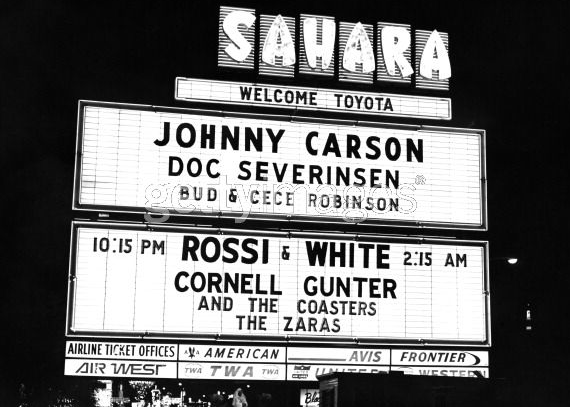
If you were here in my apartment right now I would play you the tape. The person who handled me throughout the years was a comedian who became an agent. His name was Stan Irwin. We both drove to California in 1947-48 together. He left and he went to Las Vegas. He played a place called the Club Bingo, which was at the head of The Strip. They liked him so much they said, "Stay on and be the host. Be the greeter. Do your act." He did and eventually they tore down the Club Bingo and you know what they put up? The Sahara Hotel.


Incidentally, I used to play there a lot. So, my friend Stan Irwin handled Johnny Carson for a while, he handled Pearl Bailey, he handled Vaughn Meader. He's retired now and he lives out in Los Angeles. One of my few friends still alive and he sounds great. He's ninety-one and he looks and sounds as fresh as ever. He has great stories! You want his number?


Kliph Nesteroff: Yes.