
Sammy Shore: Vegas has changed a lot.
Kliph Nesteroff: Someone who just played the South Point Hotel, however, was your old pal Shecky Greene.
Sammy Shore: Yeah, Shecky was there. I went to see him. He was (laughs)... He was Shecky. After the show I went backstage to see him with my wife. All these people were coming over to see him and my wife said, "I'm not going to stick around here. I'm gonna go gamble!" So I said, "Shecky, I gotta go." He said, "Wait a second! Where you going?" I said, "Shecky, you've got these friends [that want to talk to you]" and I left. What was I gonna do? Stand there and wait til he finishes with this entourage? He got kind of pissed that my wife Suzanne had left and I had gone.

Kliph Nesteroff: You two used to be in a comedy team together.
Sammy Shore: Oh, yes. We both started at the same time at the Oakton Manor Resort in Pewaukee, Wisconsin right outside of Chicago and Milwaukee - around there. I started out there as the comedian. I was twenty-one years old. It was so exciting because the boss that I worked for at this clothing store in Chicago - well, I just kept making people laugh. He said, "Sammy, I've got to get you up to this new place, the Oakton Manor Resort. I think you belong up there. I know the owner." The owner said, "Yeah! Send him up!" My mom and dad took me to the Greyhound bus and it was so exciting for me to get out of Chicago and get out of my house and go into show business. My first show business job. It was an enormous place. Beautiful. I went there and started as a social director for twenty-one dollars a week.

All I kept hearing there from the [tourists] from Chicago was, "Do you know Shecky Greene?" I said, "No." "Oh, he's hysterical! He's great!" That's all I kept hearing. People from Chicago kept coming up to the resort. Shecky was getting up at some bistro on the North Side practically every week, doing twenty minutes and really getting the people crazy. He was getting quite a reputation in the North Side of Chicago. So one day the Greyhound bus pulls up and I just knew in my gut... I was [organizing] a baseball game [for the resort guests]. I see the greyhound bus pull up and I knew that was going to be Shecky Greene. I see a young guy get off the bus, stocky build with a suitcase, and of all people he walks up to me. He says, "Where's Sid Shinderman? I'm Shecky Greene." I said, "Oh, shit. My job is gone. That's it." Because I knew this guy was so funny.

They called me over the loudspeaker. "Sammy Shore, please come to Sid Shinderman's office." So I went there and Shecky was smugly sitting in a chair. The boss said, "Hey, here's the new comedian, Sammy." Sid Shinderman was a real kibitzer going, "Bup, bup, bup bup bup. You two are teaming up. I'm making you a comedy team." And that was it. We started and we actually became the talk of the town. We became a big hit, but Shecky used to fight with the bandleader and with this and that and there was always a problem. He always had an attitude of screw him. Whatever it was. Finally a wealthy lady came and saw us, thought we were going to be another Dean [Martin] and Jerry [Lewis]. She put a lot of money in us, got us pictures and got us a job in New York at the Red Cellar. That was like a club that all the comics played. It was downstairs in Manhattan. We went out there and we did our Oakton Manor crap. "We're the boys from Oakton Manor and we've come to say..." all that shit. Sonny Boy and all this real corny shit. We bombed. We closed out the first night. We were in suites and everything in a real nice hotel and after that Shecky and I broke up. He went his way and I went my way.

I became a real big hit in New Orleans at The Prevue Lounge. I was working with Al Hirt. People were coming from all over to see me. I was a big hit and I was there for three straight months. The owner said, "Sammy, you've been here for a long time. Do you know anybody that could come and replace you for a couple of weeks?" I said, "Shecky Greene." Like a schmuck! (laughs) I said Shecky Greene, but of course to me he was the funniest. He went into the lounge there and I never came back. That's the story of Shecky and me. He became a real big hit in New Orleans and he became what he became. I became the number two number one. The best opening act in show business and that was my persona and that is what I did. Worked with every major star, all the years with Elvis and there was never a guy I didn't work with. That's what I was great at - I was great at that. Going out there for twenty-five or thirty minutes and getting that audience revved up. Some nights the stars couldn't follow me and had a rough time and then I didn't work with them anymore.

When I came back to Vegas I opened for Trini Lopez at The Riviera Hotel and he gave me a break. But he couldn't follow me opening night and it was the talk of The Strip. Not since Barbara Streisand opened for Liberace had there been an opening act as exciting as Sammy Shore. I was the talk of the town and everyone came to see me. I was just nuts out there. I did great bits and characters and they had never seen that in Vegas before. The Riviera Hotel wanted to sign me for three years. Bill Miller was in the audience and he happened to be the booker of the New International Hotel and The Flamingo Hotel. He said, "Sammy, if you come and sign with me I'll get you with Tom Jones." The biggest star in show business at the time. "You'll open up at The Flamingo in six months if you sign with me and I'll give you some other dates." I thought, "Tom Jones? Hey, that would be really something." I got the job and went with Tom Jones. You couldn't even get into the hotel to see him. I was great and I did the same thing. I was a big hit.


Elvis and The Colonel came into see the show as Elvis was a big fan of Tom Jones. After the show they came backstage with Bill Miller. They walked into my dressing room. I couldn't believe it was Elvis Presley! The Colonel said, "Sam, I like your brand of humor." I said, "Colonel, I like your chicken." He said, "Good boy. Lick my fingers. Would you like to work with Elvis in three weeks at The New International Hotel?" I said, "Colonel, I can't believe it. I'd love to." So I opened with them and history was made after that.
Kliph Nesteroff: I understand one of the first gigs you ever did was in Danville, Illinois and that there was a shooting at your show that evening.
Sammy Shore: Yes. That was my first real professional job. It was $125 a week after the Oakton resort. It was Dan's Supperclub - with a stripper. I'm working and all of a sudden in the middle of the show - these guys get in an argument at the ringside table. Mob guys or whatever they were. Guy takes out a gun and shoots the other guy in the head. I picked up my trumpet. People were screaming and running out. He shot him a couple of times. I'm on that stage and I picked up my horn and started singing [in a Louis Armstrong voice], "Oh when the saints! Come marching in! When the saints go marching in!" I played more trumpet and all of that and finally the cops came. The owner came over to me and said, "Sammy, let me tell you something. What you did out there... I've never seen anything like that in my life. You saved my club. It was terrible what happened here. I'm holding you over for another two weeks."

I stayed there for another four weeks, but there were things like that that happened wherever I worked. There was always something going on. Working for those guys - you never knew... but you knew... they were the Mob. They were just the greatest guys. They would give you whatever you wanted. I was working a club in Springfield, Illinois and it was really the class of the outside of Chicago. It was called The Lay Club. It was owned by a mafia guy. A couple of mafia guys. I was there and what they liked to do was throw firecrackers on my punchlines! Every time I hit the punchline they'd throw a firecracker. BANG! They were throwing firecrackers out onto the stage! What was I going to say? That was their laugh. BANG! I was running all over the stage dodging these goddamn firecrackers.
Kliph Nesteroff: Jesus.

Sammy Shore: Three or four times a week they would do that to me! Then, finally, my engagement ended and I went into the office to get my cheque. Hugo. The boss's name was Hugo. I said, "Can I get my cheque, Hugo?" He says, "Yeeaahhh." He takes out my cheque and he hands it to me... and he takes out a .45 and says, "Tear that cheque up." I said, "Wha? I just worked three weeks..." "I don't care. Tear that cheque up." I tore it up. "Now get the hell out of here!" I didn't know what to do. Then he and his partner started laughing. They gave me another cheque. They said, "Get outta here, Sammy." Every city I went to there was always something going on. Especially in Vegas and Reno and [Lake] Tahoe, you know? It was just a different era. It was a great time to be a comedian - and everyone loved comedians. All the girls. You'd get all the girls around you all the time and you always worked with a line of girls. It was just fun! It really was fun to walk on and do twenty or thirty minutes and people coming over to you after the show to autograph things and taking pictures. Even though they came to see the star, I became something special. That's what I made my fame from. And then as time went on I wrote a book and through the years I did television shows and...
Kliph Nesteroff: Yes, actually I just saw you in an episode of Sanford and Son.
Sammy Shore: Oh, yeah. Where I did a preacher bit?
Kliph Nesteroff: Yeah.

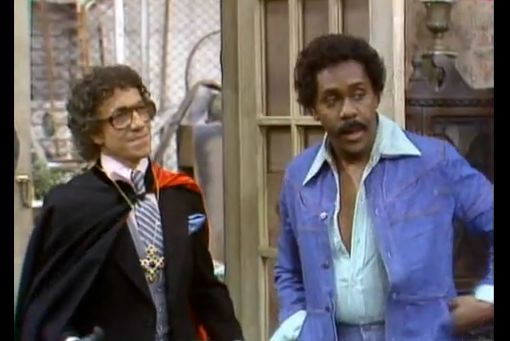

Sammy Shore: Yeah, that's been played more than any of the other shows I have ever done. Hysterical. Redd was the best. Just the best. Redd Foxx was the funniest guy.
Kliph Nesteroff: Had you known him from before?
Sammy Shore: Yes, I knew him from before from working Vegas. I did his show and we became good friends. I hung with him for a while and he, you know, he was Redd. He got sick and we was into all the [drugs]. Eventually he just had a real rough time at the end. Remind me - what are you writing about again?
Kliph Nesteroff: Well, I'll be posting a transcript of our conversation as a whole, but right now I'm working on a big article about Shecky Greene. The last big piece that I did about a comedian was on Joe E. Ross.
Sammy Shore: Oh my God, Joe E! What a wonderful guy. You know how he died? He was doing a show - I forget where he was working - in L.A. somewhere. He was doing a song and old jokes with his hands out. He fell backwards and that was it.
Kliph Nesteroff: Yeah, died on stage.

Sammy Shore: But what a wonderful, wonderful man he was. Where are you out of?
Kliph Nesteroff: Vancouver.
Sammy Shore: Oh, Vancouver! Canada! I worked The Cave there with Trini Lopez.
Kliph Nesteroff: Yes, The Cave was the main club here for many years.
Sammy Shore: Yes, it was an incredible club. Incredible! I loved Vancouver.
Kliph Nesteroff: The Cave shut down years and years ago like most of these supperclubs did, of course.
Sammy Shore: Yes.
Kliph Nesteroff: But that was the main place and it seems like every single person played it. A lot of people played it before they had a big opening in Vegas. They'd hone their act at The Cave. Jack Carter was a mainstay at The Cave.

Sammy Shore: Ah! That, pound for pound for me, was one of the funniest guys of all time. I think Jack Carter, as nutty as he was as a person whatever, pound for pound for me, Jack was the funniest. All the guys were different. Milton Berle, Red Buttons all of these guys were incredible, but pound for pound as an entertainer Jack Carter was the best. He was the best. Surpassing Shecky too. I'm talking a total entertainer. A total entertainer. There was nothing Jack couldn't do.
Kliph Nesteroff: And so prolific. He was everywhere.

Sammy Shore: Oh! Jesus Christ. And he still is! He can't hardly walk but he gets up. We went to see Connie Stevens at Eddie Fisher's memorial service. Connie Stevens is one of my best friends. In fact, I streaked in front of her in Vegas (laughs). Went out completely naked at the late show and went up there. Dom DeLuise was in the audience and he yelled out, "Is he Jewish?" Connie was married to Eddie Fisher and when he died Connie Stevens put together a big memorial service. Everyone came and the daughters got up and said something. Jack Carter got up with a cane and was just hysterical. Just hysterical! Just as funny and glib as he's ever been. But time eats us up. You're lucky you're only twenty-two years old. Twenty-three?
Kliph Nesteroff: I'm thirty.
Sammy Shore: Well, I've got a bathroom older than you. Jesus Christ. My God.
Kliph Nesteroff: But you're right, Jack Carter is much more hysterical than people realize...
Sammy Shore: Have you ever seen any of his tapes? Of his old show, I mean, when he had his own show?
Kliph Nesteroff: Yes. I talk to him all the time. He has incredible stories - and he is very honest.
Sammy Shore: Yes, he is. Of all the guys he is really right on the button. Not well-liked but right on the button. He'll say, "Well, go fuck yourself!" He doesn't give a shit.

Kliph Nesteroff: In 1951 you played The Chase Hotel in St. Louis with The Andrews Sisters. The ad has some small print that says "Sammy Shore represented by Sid Harris of Mutual Entertainment Agency." Accurate?
Sammy Shore: (silence) I can't believe that. Shit. Yes. Sid Harris was my manager. I forgot that. The Andrews Sisters at The Chase Hotel. (Silence). God, I completely forgot that... and I worked with Perez Prado at the Chez Paree in Chicago... ah, God... it's all coming back to me right now... that's really weird.
Kliph Nesteroff: (laughs)
Sammy Shore: I had forgot about that. Ah, God. I knew I had worked with The Andrews Sisters a couple of times. God. You've got a copy of that?
Kliph Nesteroff: I have a bunch of little clippings here... also a Manitowic, Wisconsin newspaper announces that you'll be starring in the play Room Service in 1951...
Sammy Shore: Yes.

Kliph Nesteroff: You were the star of "The Laugh Riot Floor Show" at The Casablanca with a singer named Shari Barlow in Massilin, Ohio...
Sammy Shore: Oh my God! Can you send me copies of this stuff?
Kliph Nesteroff: Yes, sure.
Sammy Shore: I'd really appreciate that. That'd be great because I don't remember half of that shit.
Kliph Nesteroff: March 1951, The New Turin Inn with a personal appearance from Buddy Baer at The Ida Grove in Iowa.
Sammy Shore: Yes. Buddy Baer, would you believe that one? I forgot that one! You got things that I have... in those days... that I can't believe... I forgot all that stuff!
Kliph Nesteroff: Well, that's what I do.
Sammy Shore: And then people read this stuff on the internet...
Kliph Nesteroff: Yes.


Sammy Shore: Well, you seem very bright. I just did a couple shows at the Sun Coast, which is one of the big hotels here. They want me to work again and they just called me the other day, "Sammy would you like to open with Norm Crosby on June 16th and 17th?" I said, "Of course!" I'm still doing it. I get so excited. I feel like I'm twenty-one again. Shecky is the complete opposite. "Fuck that show business! That's bullshit! With those fucking comics!" I asked him to come do my [annual fundraiser] at the Palms Hotel. We raise money for the rescue animals and animals that really need money, with seventeen comedians; George Wallace, Bobby Slayton and all the guys. I have people calling me. If you are still funny and can do that then you should do it til you can't do it anymore.
Kliph Nesteroff: I once heard Bob Newhart say something in an interview in which they were talking about comedians that use stand-up comedy as a stepping stone to getting their own sitcom and then never doing stand-up again. He said that if you're born funny and you know how to do stand-up, then you almost have an obligation keep doing it - because not very many people can.

Sammy Shore: I agree with him one hundred percent. A few years ago that's all it was in L.A. - they were just doing stand-up to get the sitcom. Then they'd get the sitcom and after five, six, seven episodes it was off the air! They're not actors! That's the best quote I've heard in a long time, what Bob Newhart said.
Kliph Nesteroff: Now, you came out with a novelty single in 1955 that was a take-off of the song Sixteen Tons and it was called Seventeen Tons.
Sammy Shore: Yes! Yes. Do you have a copy of that?
Kliph Nesteroff: No, I don't. How did it come about - do you remember?

Sammy Shore: Well, I was living in Detroit at the time. Artie, this musical guy, did records and shit like that, he saw me. He said, "Jesus, Sammy, that thing you do in your act sixteen tons would be perfect." He called the CEO of the Record Company. He said, "I've got this guy in Detroit..." and he said, "Okay. Let's do it." We put out a 45 single. One side was that and I forget what the other side was and it sold about one hundred thousand records! In those days that was a lot. It was the talk of the industry and it became a hit. It was a take-off on Tennessee Ernie Ford. I can't believe you remember all of that, my God.
Kliph Nesteroff: I also have a blurb that says you played the Michigan Agricultural State Fair - August 1957.
Sammy Shore: Jesus Christ.
Kliph Nesteroff: Good gig (laughs).
Sammy Shore: Michigan State Fair? Oh my God. Yeah, with the animals. I did a lot of work in Michigan because I was living in Detroit and I had my own television show at the time.
Kliph Nesteroff: What was the TV show?

Sammy Shore: The TV show was a fifteen minute, three time a week thing called The Sammy Shore Show. That's when Soupy was really popular. I couldn't compete with him at all. Yet, I was on for about six months. A guy that saw me working at a nightclub in Windsor, which was right across from Detroit, said, "Oh, Sammy, you're so funny. I'm going to get you on television." He was the head of the station, the NBC affiliate in Detroit. "I want you to get together fifteen minutes and we'll start with just the one show." It was a hit and then I was on for three times a week for about six months.
Kliph Nesteroff: And the name of the club in Windsor was The Elbow Room.
Sammy Shore: Elbow... Jesus Christ! Oh my God! You're amazing.
Kliph Nesteroff: Do you remember anything about that venue - The Elbow Room?

Sammy Shore: Yes I do. It was right in the back at the bar. I remember I did a Polish car salesman. A Polish car dealer. It was the talk of Detroit - they're all Polish there. Everyone came from all over and would shout out, "Do the Polack! Do the Polack!" Y'know? I was well-known there and I was such a hit that I got into the hotel in Windsor. The big hotel with all the big acts. I was a hit there too. God, I can't believe all these things are coming back to me. I can't believe... people call me for their books or for this or that, but I don't remember... you are the first person that has ever gone back that far... and I know that I did those things...

Kliph Nesteroff: I try my best to do that. It's always a great frustration to watch interesting people interviewed by some yahoo that just asks the same, bland, generic questions. It seems like such a lost opportunity. You'll occasionally see old comedians interviewed by some host that knows very little about their subject ask something like, "What do you think of comedy today?" Well, who cares? I don't care what he thinks about comedy today! Ask him about something interesting that happened during his career! I want to hear their unique story, not something generic.

Sammy Shore: I worked my first job in Vegas at El Cortez downtown. It was great. I had two little kids, Scotty and Sandy. Over fifty years ago. Mitzi, my wife at the time, I took her with me. Her sister watched the kids and we went to Los Angeles. I worked with a musical group in Dayton that were going to be doing The Bob Crosby Show, the afternoon television show I did. I forget the name of the group, but I called them and said, "I'd like to come see the show." They said, "Sammy, why don't you do a few minutes?" It was an afternoon show and it was live. I did and I killed the people. A couple of executives watched the show and came to me after the show. Here I am, I was really just kind of beginning. California and Vegas the first time. New babies. Just the beginning of my career. They said, "Sammy, we would like you to come and do the Jack Benny show. We really love your comedy. Maybe we could work something out for you at CBS."

I'm listening to these guys. Then they said, "Where you going now?" I said, "I'm going up to Wisconsin to do the summer there." He says, "Well, we'll call you there." I was working that resort every summer. He said, "We'll call you there." I never heard anything after that. Never heard anything after that. These guys were executives, suits. Even the musicians that brought me in were like, "Oh, Sammy! Do you know who those guys are? Oh my God! Congratulations." I thought this was the beginning of a whole new stardom kind of thing coming on and I went back to Wisconsin and waited and waited and waited and never get the call.
Kliph Nesteroff: Someone that did end up using you on television around the same time, however, was Dick Clark, right?
Sammy Shore: Yes.
Kliph Nesteroff: How did that come to be? I read you were on an episode with Jack E. Leonard.
Sammy Shore: Oh my God. I can't believe that. You got that!?
Kliph Nesteroff: Well, I don't have a copy. I just read that it... happened.

Sammy Shore: Yeah, well, I got that... that was a talent show. I don't remember too much about it, but it was with Jack E. Leonard and he was my favorite comedian. He was from Chicago and he really helped me alot. I guess he got me the show. I guess. I don't remember too much of it at all, but that's amazing.
Kliph Nesteroff: What was Jack E. Leonard like?
Sammy Shore: Oh, he was just... what Rickles is today - that's what Jack E. Leonard was. Rickles, say what you want... Don was very funny and became what he became. He had a great sense, but it was all from Jack E. Leonard. Jack E. Leonard was the insult guy. As fat as he was, that's how big his heart was. Everytime he'd work Vegas or wherever, I would always go see him. He'd always have me come back to his dressing room and we'd go out to eat. He couldn't have been nicer to me. I guess when that Dick Clark thing came - I guess he was the one who got me that.

Kliph Nesteroff: I heard that you also used to warm up the audience for the earliest Regis Philbin Show.
Sammy Shore: Yes, I did that. I got $239 a week. When I first came to California I was a warm-up guy there with Regis for six months I think. Toward the end he started putting me on camera. The Joey Bishop Show came along and I did warm-up for that. Then when I took off in Vegas, then Joey Bishop had me on for a whole week. Regis was an incredible human being. I went to the opening of Viva Elvis here in Las Vegas. It was about a year ago, I guess. I was sitting right up front and Regis was sitting in back of me. I turned around and I said, "Regis, do you remember me? Sammy Shore." He said, "Oh my God!" He freaked and the next day on his television show in New York he talked about Sammy Shore. He gave me a big plug and talked about me.

That's what's so good about living in Vegas. When I first moved here four years ago, Glen Campbell was working at the Golden Nugget downtown. I worked with Glen Campbell a lot and even did his television show. I went to see him. He didn't know I was in the audience. I walked into the audience and he said, "Sammy Shore! I thought you were dead!" It was great to see Glen and that's what's great about Vegas - you see all the old guys coming back. I always go visit them. It's a great feeling to walk around here. My wife tells me I'm a goddamn legend. I say, "Well... yeah... but I... y'know." Everywhere I got the young comics coming up to me, "Oh, Sammy, you're a legend!" I always tried to help the young comics. We had The Comedy Store and I always did everything I possibly could to help the comedians. Mitzi took it over and made it a business. I opened the door. Redd Foxx would walk in - I'd put him on. Whoever stopped in. Martin... with the banjo...
Kliph Nesteroff: Steve Martin.

Sammy Shore: He used to sit in the back of The Comedy Store with his banjo and say, "Sammy, when am I going to go on?" "After the next guy. After the next guy." David Brenner and Freddie Prinze and all of these guys. Looked what happened to all of 'em because of The Comedy Store. Mitzi had the run with Pryor and Robin Williams and all the other guys that started there after I gave her the Store and she took over. She made it a real business. She built it to what it is today.
Kliph Nesteroff: Speaking of comedians galore... there is a movie you appear in that is full of nightclub comics of your era, and that is Jerry Lewis' The Bellboy.
Sammy Shore: You remember that too! 1960. Well, I was a Miami Beach comic and Jerry used all the Miami Beach comedians. I had a couple of great scenes and of course they were cut out. I wasn't in it that much. But Jerry was nice to all of us. Jerry loved the comedians and was nice. What he has become today... I don't even know. I don't even care. But in those days when he was a young and a big star, he was very nice to all the comics and I respect him for that.

Kliph Nesteroff: Let me ask you about a couple of the other comics that were in The Bellboy and that you certainly would have run into during the heyday of comedy along Miami Beach. How about B.S. Pully and H.S. Gump?
Sammy Shore: Hysterical. Those two guys were really off-color. In those days you didn't work off-color, but because they were and they were so damn funny they got away with it. They were just incredible characters. These older guys that were old time show business, they'd say "shit" or "fuck" and they'd do dirty things on stage with props and stuff. They were hysterical. They were hysterical. You don't see that anymore and I know that's an old expression - it ain't like it used to be and who gives a shit, but... I always cared about comedians and I always listened to them.

Things like that through the years... you're saying these things to me now, some I don't remember, but I did all those things and I did have a mammoth career. A career that spanned sixty years. You think back sixty years - I remember when Milton... I used to be with Milton Berle a lot. I was like his favorite younger comedian. I would be with him at his table all the time at The Friar's Club and have lunch with him every day. He took me under his wing. He would tell me, "Yeah, Sammy, I've been in show business in sixty years." He eventually went into a wheelchair and died at ninety-three. Nobody even talks about him. No one even talks about him or Red Buttons or Jan Murray or all of those guys that really laid the groundwork for all of these guys.
Kliph Nesteroff: How did you first get to know Milton?
Sammy Shore: Well, because of The Friar's Club. I was invited and went up there and got kind of friendly with him and he made me join under his tutelage or his good word. Of the comedians, I was the chosen one to be a Friar. He signed me up and I was a Friar and I was with him practically every day.
Kliph Nesteroff: You mention Red Buttons. Red Buttons was known for two things. One - for being funny. Two - for being a jerk.

Sammy Shore: Wellll.... I never... you know... I did shows with him... I don't think so. I mean, maybe... probably his television show. When he was doing his television show he was probably firing this and firing that writer. When you're thirty-three or thirty-five or whatever it was, you know, you've got that big shot [attitude] and the problems - that's where they'd stem from. But in later years Red was wonderful. Wonderful and he loved comedians. He was very nice to me.

In fact, he came to see my one man show called On Stage and a Little Bit Off. It was at the Santa Monica Playhouse and he came with Lou Alexander who was a close friend and used to be a comic years ago. Lou brought him to see me. Red had seen me do stand-up and roasts, five minutes here, five minutes there. He saw me do an hour and a half at my one man show. He came to me after and he said, "Sammy, I knew you were talented, but I never knew were that talented." I never forgot that compliment that he said to me. I became one of his real close friends too. He was always very nice to me. You know, those guys were special. They were a special bunch of guys, they really were.
Kliph Nesteroff: What do you remember about Jan Murray?

Sammy Shore: Jan never stopped talking. He just kept on and on and on...
Kliph Nesteroff: (laughs)
Sammy Shore: I met him at private clubs in L.A. for dinner, for lunch, for this and that. He really liked me too and we became very good friends. The guy just never stopped talking. All these stories, bappa bappa! "Remember the time, Sam, badda bee, badda bah, bappah, bappah!" Funny as hell. I saw his stand-up in Atlantic City and it was hysterical and talking about being older. All those guys were so special. I can't even tell ya.
Kliph Nesteroff: Buddy Hackett.

Sammy Shore: Oh, Buddy was, oh, just, oh... forget about him! Buddy, of all the guys, he was the quickest and the funniest. He was funny as hell! He was like a Shecky in a way. Just off the wall and out the side of his mouth. He was just hysterical. Always wore gloves.
Kliph Nesteroff: (laughs) What?
Sammy Shore: He was very... he didn't want to touch anything. Always wore gloves.
Kliph Nesteroff: (laughs)
Sammy Shore: (laughs) He was afraid he was going to catch something. He had a house in Malibu and he had a home in L.A. and he went out to Malibu that one afternoon, he was sitting in a chair... and he died. Sitting in the chair out in Malibu and they found him dead. I was with him a few months before, talking about the book I was writing. I interviewed him and he gave me a lot of insight. It's a shame that all of those guys couldn't live forever.
Kliph Nesteroff: Jack Carter and Shecky Greene tell me that Buddy Hackett loved guns.

Sammy Shore: Yes! Yes he did. I don't know enough about [that side of] Buddy, but Shecky talked to him every day. If you've talked to Shecky a lot then you know a lot about Buddy Hackett. Shecky didn't have many comedian friends. I don't think he did unless he had some I didn't know about, but everyone loved him and respected him because he's so damn funny. I wanted him to do my fundraiser and he said, "Ah naw. I don't wanna be with comedians." He's always putting down the show business. "Ah, I hate this fuckin' business. I hate this fuckin' thing." He was doing that when he was twenty! Twenty-one years old! "Ah, I hate this fuckin' business! I gotta do another show? I just did another show!" And then he'd jump up on the stage at the end of our show and do another twenty minutes! I'd say, "Shecky, we're finished!" He'd say, "Ah, fuck you too!" Yet he'd throw up before he'd walk out. Some nights he was so nervous he would throw up backstage. But once he got out there on the stage he was great.

Kliph Nesteroff: How about Lenny Bruce?
Sammy Shore: I met Lenny a few times and I was friendly with him, but he was kind of before my time as I was just starting out in the business when he was getting big. Of course, I heard of him and I went to see him at the Marilyn Hotel when he was working in the lounge of the basement and I met him for late show snacks or coffee a few times. That was the only way I knew Lenny. But his mom was a big fan of mine. She was really friendly, Sally, just a great lady. And she came to The Comedy Store when it first opened. She was there opening night. She used to come in and sit in the back and just love it. Sally Marr was just an incredible human being.
Kliph Nesteroff: Lord Buckley.

Sammy Shore: Ah! They put him in a straight-jacket. He was off the wall. I never really saw him. I just heard about him in the business and used to hear about Lord Buckley all the time. I never saw him do stand-up, but I heard that he was just phenomenal and so different and edgy. And Paul Gray was like that too. Do you remember Paul Gray?
Kliph Nesteroff: No.
Sammy Shore: I mean, you don't remember his name at all?
Kliph Nesteroff: It's not ringing a bell, no.
Sammy Shore: Well, Paul Gray was like that too. Just a very, very funny man. He died kind of young I think, maybe in his fifties. There are a lot of guys that you don't know of that never really got to that level. Just a handful of guys...
Kliph Nesteroff: There's a guy in that realm that the general public never really knew, but every comedian seems to have story about and that's Gene Baylos.

Sammy Shore: Oh, shit. He was just... of the guys that did roasts he was one of the funniest. I did a one-man show in New York called The Warm-Up. All the guys were in the front. Henny Youngman. I used to have lunch with Henny Youngman every single day at The Friar's and of all the guys, including Milton Berle, Henny Youngman was the nicest to me. As old as he was, he would schlep in the winter to The Friar's. He schlepped to my one man show. Gene schlepped the same way. Henny threw lines at me through my whole one man show!
Kliph Nesteroff: (laughs)
Sammy Shore: I was doing my show at the Santa Monica playhouse and Milton, who was older at the time, drove at night all the way from Beverly Hills out to see me. I put him in front and then I introduced him. That's all I had to do. He got up onstage and they all forgot who they came to see. They forgot about my show and Milton did about a half an hour. Also he came out to me when I had a club out by Marina Del Rey called Sammy's Comedy by the Shore. Milton would come out there and all the old guys and just get up and do what they do. I had that place for about three years. I always wanted a place... it was never a money thing with me. I never really cared about the money, I just wanted a place where the comedians could come and work on their stuff.

I remember I worked with Bobby Darin in Toledo, Ohio at a Chinese supperclub and Bobby Darin just had Splish Splash. A big hit. He was there and the line-up was around the block and I used to play trumpet to close my act with. Louis Armstrong, Harry James and things with arrangements. Good trumpet. Bobby came to me one day and said, "Sammy why are you closing with the trumpet?" I said, "Don't you see the reaction I get before you come on?" He said, "Yeah. They walk out talking about what a great trumpet player you are! Why don't you play the trumpet in the middle with the comedy so they walk out talking about your comedy?" Now he was sixteen giving me this advice! I did that and I did that for years. He was absolutely right.
Kliph Nesteroff: Right.

Sammy Shore: Now you are doing something special for all the guys that... you're keeping Jack Carter alive by being able to talk about his wit and the way he is today and all the guys, Shecky, and all the guys that are living. To bring that out of them and to let the people hear what comedy was all about - that's a real tribute to you.
Kliph Nesteroff: Well, it's really a lot of fun.
Sammy Shore: You talked to Shelley Berman. How was he? Isn't he something?
Kliph Nesteroff: Yes, he was great.
Sammy Shore: Yeah, he's a great storyteller and he's still great today. I did a couple of shows with him and he just gets the chair, sits there and does whatever he does and it's incredible. Great actor. Still getting parts with that show that he's doing with Larry uh...
Kliph Nesteroff: Larry David.
Sammy Shore: Yeah, he's still working and still great. He's truly one of the gifted guys, really.

Kliph Nesteroff: It's nice to see legends at that age getting work. Shelley has that show. Of course Don Rickles is popular. Carl Reiner and Betty White are now working together...
Sammy Shore: Betty White was never a stand-up or anything, but doing what she's doing and loving it. She's a big animal advocate and I wanted her to come do my show and she said, "I can't. I'm so busy." She would've but she said, "I just can't." She's a hot commodity and she's eighty-eight. Look at Betty White and look at Don Rickles still doing it. Funny is funny and if you can still do it in your eighties and still get that same reaction from the people... I went to see Don at The Orleans Hotel a couple of years ago when he first came in and he was Don. A big orchestra in back of him and that song he does at the end that is so corny. "Love me and bup, bup, bup..." enough already with that! I went to see him and he couldn't have been nicer. I've known him for years. He was called the glass head - he did a thing with this glass on his head. You know about that?

Kliph Nesteroff: Is this the dramatic piece that he used to do in his act?
Sammy Shore: I don't know what it was. It was called the glass head. It was part of his act. He had glass over his head and I don't know what it was. It was known as the glass head around Detroit and we were both just starting around that time. So, everyone has a path. If you're funny and you have an attitude there just seems to be away for you to go if it's from you heart.
Kliph Nesteroff: You were in an episode of The Munsters with fellow nightclub comedian Charlie Callas.
Sammy Shore: Charlie Callas. Very physical, funny, funny guy. In fact, I started him in show business.
Kliph Nesteroff: Oh, really?
Sammy Shore: I got him his first job at The Thunderbird Hotel in Miami Beach, Florida. He was a drummer in a band. He saw me and he said, "Sammy. I'd like to some jokes and stuff like that." I got him a job there and they loved him! He started there and he started working all the gigs on the beach. Sinatra loved him and he became what he became. Then he came out here to Vegas and he just wasn't... it was over with for him. It became very hard for him. But ask him to do five minutes and he would do twenty minutes; just wouldn't get off the stage. Physically he was just a funny, funny comedian. Did you ever see him?

Kliph Nesteroff: Never live.
Sammy Shore: He was something. All those guys just... when he died there was supposed to be a memorial, but nobody ever heard anything. Not a word, nothing. We couldn't do anything! He was just gone and that was the end of it. Nothing! Not in the paper, nothing! Charlie Callas died and that was the end of it!
Kliph Nesteroff: The public saw so little of him for the last twenty years - did he become a recluse?
Sammy Shore: I think maybe he just couldn't find the work. He couldn't do what he did before. It was out of favor. He was out of the business in a way. When you're not in show business anymore - you don't retire. They just tell you. The phones don't ring anymore and they forget about you. Then you know it's over with.
Kliph Nesteroff: Years ago you put out a comedy LP called Come Heal With Me.
Sammy Shore: Yes.
Kliph Nesteroff: What's the story behind the album?
Sammy Shore: Liberty Records. I did that because I was a hit in Vegas. The Liberty people came to me in Vegas and wanted me to do an album of the Brother Sam character and I did the whole album as the character.

Kliph Nesteroff: And all the material on there co-written with Rudy DeLuca.
Sammy Shore: Rudy Deluca, yeah. He was also a writer with Mel Brooks and won a couple of Emmys for The Carol Burnett Show. Barry Levinson was one of my Comedy Store players and Craig Nelson was too, so we had some pretty good guys there.
Kliph Nesteroff: How did you first get to know Rudy? You guys did a lot of stuff together.
Sammy Shore: When I used to go to New York, I met him through another comic. We got friendly and Rudy was a great physical writer and I was a physical comic. We started working on bits together and Rudy became my writer through the years. I talk to Rudy everyday and we still work on stuff! I work on material every day.
Kliph Nesteroff: You mention New York - did you hang out at places like Hanson's Drugstore?

Sammy Shore: Oh, of course. All the comics would hang out there and just go and kibbitz with each other and have fun. It was always something going on and it was just alive. It was just alive. Now all the young comics hang out and smoke dope, pot and all this shit. You want a joint, you want this - it's just different. We drank. No one ever took cocaine, but guys smoked and maybe smoked a little pot. When I had The Comedy Store and Richard Pryor invited me and Mitzi to his house. Of course, he was smoking pot and we were having dinner. "C'mon, Sammy, let's go sniff a little coke." I didn't know what the hell it was. I did. I sniffed it once and I didn't feel any different and that was it. That was the last time I did that, but Richard - that's what he did. It killed him. He still would have been alive today and he could have talked about getting old. And you know another guy? Hicks. Bill Hicks.If he was alive today he would be a big star.
Kliph Nesteroff: Yes.

Sammy Shore: Bill Hicks was like Lenny Bruce. Have you ever seen anything of his?
Kliph Nesteroff: Yes, plenty.
Sammy Shore: Was there any kid funnier than him at that time? He was incredible! And what's his name who just died recently? Giraldo.
Kliph Nesteroff: Greg Giraldo.
Sammy Shore: An incredible comedian! He was just breaking through. He died in his fuckin' hotel room! Jesus Christ! These guys. I don't understand it. Being from a different era though, I guess... I was into alcohol. I drank a lot. I haven't had a drink now in thirty-five years. Enough is enough already. Once you start that shit - and all the years I spent with Elvis. I didn't know. The doctor was coming every day with his satchel. Dr. George. "Hey, Sammy. How you doin? Yeah, gotta go see Elvis and give him his B12 shot." That's what I thought he was getting. Although, I never really saw Elvis take anything. I was very friendly with him. I traveled all over the country with him and we would talk. I never saw any drugs or anything. I didn't know he was doing all of that shit. When he died I just couldn't believe it.

Kliph Nesteroff: You were his opening act for a while and then Jackie Kahane became his opening act. How come?
Sammy Shore: What happened was Colonel Parker loved me so much and so did Elvis that I had a lifetime contract with them. "As long as Elvis is going to be on the stage - you're ging to be with him." I said, "Okay." That was incredible. After about three years Alex Shoofey, the president of the Hilton, said, "Sam, why don't you go in the lounge?" He had a big seven-hundred seat lounge. "Do your show in there!" I said, "I don't know - what will Elvis and the Colonel think if..." He said, "Hey! Sammy. Don't worry about it. I pay Elvis and The Colonel their money. I'll tell them. Don't worry about it." I said, "Okay." And he paid me a lot of money to go into the lounge. My ex-wife Mitzi said, "Sam. Don't do it. You're not a lounge comic. Stay out of the lounge. Stay with Elvis." My ego was soaring. Here I was with Elvis. The talk of Vegas. Elvis and Sammy. Well, mostly Elvis. Then I took the lounge. Then one day Jerry Weintraub comes by getting ready to do the next Elvis show. I told the Colonel that I was going into the lounge and said, "How much money?" I said, "They're giving me ten thousand dollars." "Oh, yeah? Take it." I had already accepted the job before I went to the Colonel. He said, "Take it. It's okay." So I thought it was okay! Then Jerry who was arranging our tour came to me and said, "Elivs and the Colonel don't want you on the show anymore. They don't want to work with a lounge comic." How bout that? I couldn't believe it! And that was it. It was over with.

Kliph Nesteroff: So you must have already known Jackie Kahane. Did that...
Sammy Shore: Oh, I knew him for a long time. I was with Jackie Kahane until the final days of his life. Spent a lot of time with him. I went to pick up his pills. Went to The Valley to see him. He was with Elvis for his last few years. Had I not gone into the lounge I would have been Elvis til he died, but then there would have been no Comedy Store.
Kliph Nesteroff: Things never became awkward between you and Jackie?
Sammy Shore: Oh, no, no, no. We were friendly and years later. I spent time with him. He was just a great guy.
Kliph Nesteroff: There was another comic named Jackie Kannon.
Sammy Shore: Yes, Jackie was very funny. A New York comic and he did a lot of parodies.
Kliph Nesteroff: There used to be a club that he worked at called The Rat Fink Room.

Sammy Shore: Yes. I don't remember the room at all, but I knew that's where he worked and it was very popular. There was another place in Brooklyn that Don Rickles' manager owned. Jilly. Jilly was part owner of that club and I worked there.
Kliph Nesteroff: Pat Cooper told me an anecdote about being in Jilly's when Johnny Carson started urinating all over his leg. This was in Carson's heavy drinking days.
Sammy Shore: Johnny was really quite the character. He came to see Elvis, of course. I guess he didn't like me and that's why I never got the show. But when Johnny liked you he made you. Jay Leno and David Letterman don't mean shit today. But if Johnny put you on his show... I remember the night that David Brenner went on and was a smash. That show made David Brenner. The kids from The Comedy Store went on. Carson was show business. If you had a good five or ten minutes and were different - if Johnny liked you, you had it made. No more.

Kliph Nesteroff: You were on a lot of sitcoms in the sixties. You were on a forgotten sitcom that starred nightclub comedian Sandy Baron called Hey, Landlord.
Sammy Shore: Garry Marshall was the producer of that show and I played the landlord. Sandy Baron was the star of that show and it was a great part for me. It did very well, but didn't last long. In and out and that was it. But Sandy Baron was truly one of the funniest guys around, but I think he got involved in drugs and all that shit. He came to The Friar's Club one night. He came schlepping in. "Sammy, remember me? Sandy Baron." "God, Sandy." I took him up to the main room and we had lunch and I never forgot that and it wasn't long after that he died. He had his own TV show - not that one - but a kind of variety David Letterman type of show. I remember I did that one with Della Reese and some other people. You'd remember better than I. You'll have to tell me what I've done! I don't know what the fuck I've done! Jesus Christ! I didn't know I did that many shows!


Kliph Nesteroff: You did an episode of Broadside with Arnold Stang.
Sammy Shore: God, I don't remember that at all.
Kliph Nesteroff: You did an episode of McHale's Navy.
Sammy Shore: Yeah, I remember that. Arnold Stang thing I don't remember. Some of this other stuff with Buddy Baer and Andrews Sisters, Jesus Christ, you're going back to another century.
Kliph Nesteroff: You also did a show called The Accidental Family.
Sammy Shore: Right, with Jerry Van Dyke. That one didn't last too long either. You put Sammy Shore on your show then it's going to be canceled! Like Pauly. Pauly got the sitcom and it got canceled. Actually, can I just say two words about my son Pauly?
Kliph Nesteroff: Sure, go ahead.
Sammy Shore: I'm sorry!


